
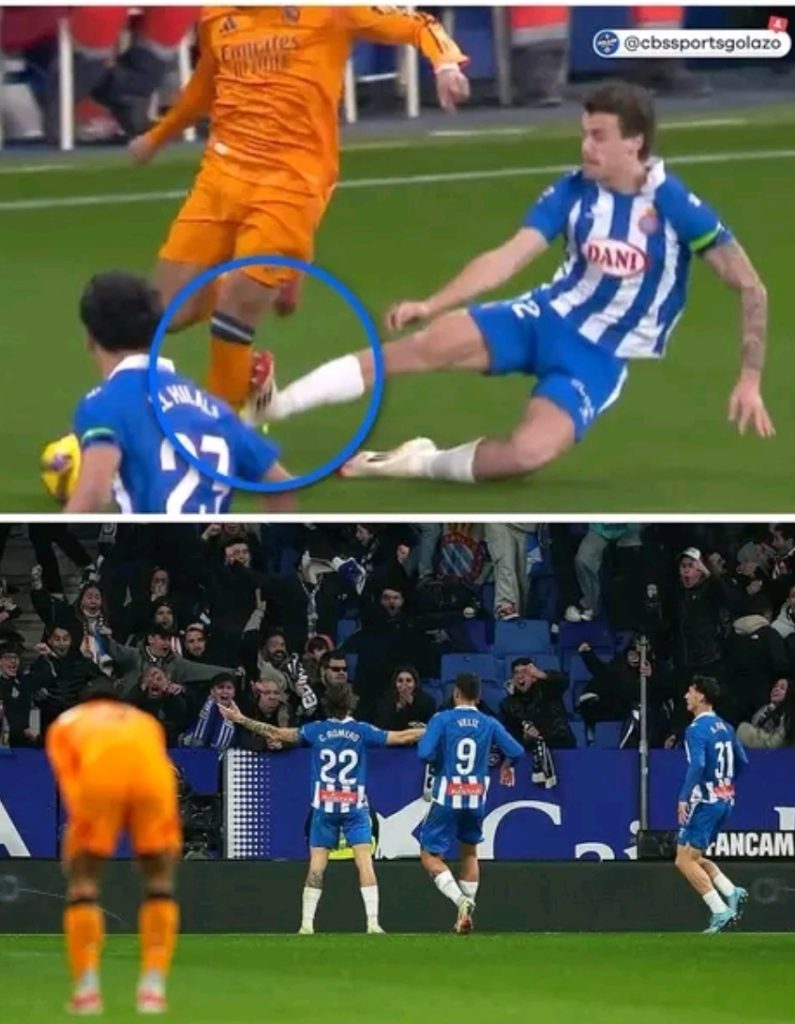
Carlos Romero’s statement reflects a deep understanding of the challenge posed by Kylian Mbappé’s exceptional speed and dribbling ability. In saying, “I knew it was impossible to stop Mbappé running,” he acknowledges one of the defining characteristics of the French forward—his incredible acceleration and agility. Mbappé is widely regarded as one of the fastest footballers in the world, with his ability to burst past defenders in one-on-one situations making him a nightmare for opposition players. Romero recognizes this and admits that there was no realistic way to stop Mbappé in open space purely through fair and clean defensive play.
The phrase, “I stopped him as best I could,” suggests that Romero had to resort to unorthodox or less desirable methods to prevent Mbappé from advancing. This implies that he likely used physicality—perhaps through tactical fouls, grabbing, or obstructing Mbappé—to slow him down or disrupt his rhythm. When a defender faces a player of Mbappé’s caliber, they are often forced to push the limits of fair play to prevent dangerous situations, particularly if left in a vulnerable one-on-one position.
Romero then describes his actions as “a bit ugly,” acknowledging that his methods were not aesthetically pleasing or sportsmanlike. This likely means he committed a foul, perhaps a rough tackle or a pullback, which may not have been in line with the spirit of the game. His self-criticism shows that he is aware of the way his actions could be perceived—either by fans, officials, or even Mbappé himself. He implies that the way he stopped Mbappé was not how he ideally wanted to defend but was something he felt he had to do given the circumstances.
Finally, he adds, “I didn’t like it, and I apologised to him.” This demonstrates sportsmanship and respect towards Mbappé. Despite doing what he felt was necessary to prevent Mbappé from advancing, Romero was not entirely comfortable with the way he executed his defensive duties. By apologizing, he shows a level of integrity and acknowledges that, while football is a competitive sport, fairness and respect between players are still important.
In summary, Romero’s statement highlights the difficulties defenders face when coming up against elite players like Mbappé. It provides insight into the tactical decisions defenders must make under pressure, the ethical considerations of stopping an opponent through physical means, and the respect that still exists among professional footballers. His words reflect an inner conflict between competitive necessity and sportsmanship, showing both his determination as a defender and his moral awareness of fai
r play.